 Essential Takeaways
- Ordering fine white sand, aggregate sand, and fill dirt early prevents costly project delays during Lakeland’s busy construction season.
- Each material serves a different function, so matching the right sand or fill type to your application affects long-term performance.
- Bulk ordering reduces per-yard costs and gives you priority scheduling with suppliers before demand spikes.
- Screened and graded materials save time on-site by reducing the need for additional processing.
- Local sourcing in Central Florida reduces transportation costs and secures that materials are suited to regional soil and climate conditions.
Running out of aggregate sand halfway through a foundation pour or waiting two weeks for a fill dirt delivery during peak season are the kinds of setbacks that throw your entire project timeline off. For contractors handling jobs in Lakeland, FL, spring and summer are when demand hits hardest, and locking in your fine white sand, aggregate sand, and fill dirt now keeps your crews productive and your budget intact.
Here’s a practical breakdown of what to order, how much to plan for, and when to pull the trigger.
Fine White Sand for Concrete and Finish Work
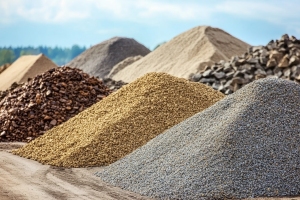
Fine white sand is one of the most commonly used materials across residential and commercial projects, and it’s often the first to run short on a busy job site. You’ll need it for concrete mixing, mortar work, stucco applications, and finish grading.
For concrete applications, you want sand with particles in the 0.075mm to 4.75mm range and a fineness modulus between 2.3 and 3.1. Medium-grade sand works best for most Lakeland projects because it balances workability with strength. Too-fine sand forces you to add more water to your concrete mix, which weakens it. Too coarse, and the mix becomes difficult to place and finish properly.
When ordering, ask your supplier if the sand has been mechanically screened. Screened sand gives you consistent particle sizes across every load, which means more predictable concrete behavior from batch to batch.
And make sure that the stone powder content falls within the 3% to 10% range for standard concrete work. High-strength applications perform best closer to 3%, while general concrete can tolerate up to 10% before cement bonding starts to suffer. Anything above that threshold risks reduced strength in the finished product.
For a mid-size commercial project, plan to have your fine white sand delivered at least 2 to 3 weeks before your first scheduled pour. That buffer accounts for any weather delays or delivery scheduling conflicts that tend to stack up during busy months.
Aggregate Sand for Structural and Base Applications
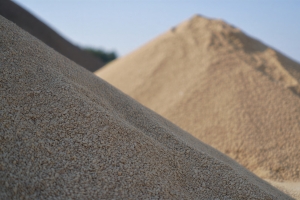 Aggregate sand handles the heavier structural work on your project. You’ll use it for road base preparation, backfill behind retaining walls, pipe bedding, and sub-base layers under slabs and pavements.
The angular particle shape of properly processed aggregate sand creates strong mechanical interlocking when compacted, which is why it performs well under load-bearing conditions. Rounded grains don’t lock together the same way, so you end up with a weaker base that’s more prone to shifting over time.
One thing to pay attention to is the composition and grading consistency of your aggregate sand. Manufactured aggregate tends to have more uniform mineral content than naturally sourced material, and the grading can be controlled during production. That consistency matters when you’re compacting base layers, because unpredictable particle sizes lead to uneven density and potential settlement down the road.
Order aggregate sand in bulk whenever possible. Larger orders typically come with lower per-yard pricing, and you avoid the headache of scheduling multiple smaller deliveries mid-project. For jobs requiring 500 or more cubic yards, getting your order placed early gives you the best chance to lock in competitive rates and preferred delivery windows before the summer rush.
Fill Dirt for Grading, Elevation, and Site Prep
Most Lakeland construction projects need fill dirt at some stage, from raising a low-lying lot to grading a commercial pad to building up around foundations. Clean fill dirt, free of organic matter, debris, and contaminants, gives you a stable base that won’t decompose or settle after construction is complete.
The solution for fill dirt in your Lakeland, FL project is to match the material to your application. Clean screened fill works well for areas close to structures where you need predictable compaction. Unscreened fill is more cost-effective for large-scale grading where you’re moving significant volume, and precision isn’t as tight.
When you’re placing fill dirt, the thickness of each lift should be based on the largest particle size in your material. The standard rule is to keep lift thickness at no more than two to three times the size of the largest particle. So if your material’s largest particles are 1 inch, your lifts should max out at 2 to 3 inches. Finer fill materials need thinner lifts to compact properly, while coarser materials can handle slightly thicker ones.
Make sure each lift is fully compacted before you start on the one above it. Skipping this step or dumping lifts that are too thick for your particle size creates air pockets that lead to uneven settling months later. And given Lakeland’s sandy native soils and seasonal heavy rainfall. Proper compaction is especially important for preventing moisture-driven movement beneath your structures.
Timing matters here, too. Fill dirt suppliers get stretched thin as site prep ramps up across the region heading into summer. Placing your order now and scheduling phased deliveries based on your project timeline helps you avoid the scramble when everyone else is competing for the same trucks.
Quick-Reference Ordering Timeline
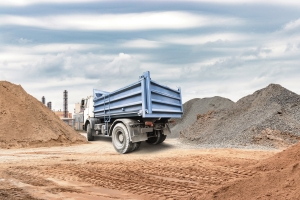 Place orders for all three materials as early as possible to secure delivery during peak months. Schedule fine white sand delivery two to three weeks ahead of concrete pours. Coordinate fill dirt deliveries in phases that match your grading schedule. Material isn’t left exposed to rain for longer than necessary. And confirm that your supplier can handle your full volume requirements before you commit, especially for jobs exceeding 1,000 cubic yards.
Get Ahead of 2026 With Barclay Earth Depot
Barclay Earth Depot has been helping Florida contractors and project planners source the right fine white sand, aggregate sand. Fill dirt for their Lakeland, FL projects for years. Our team provides material consultation, bulk pricing, and delivery scheduling. This keep your 2026 projects moving on time and on budget. Contact us today at (941) WE-DIG-IT or online to lock in your materials before the busy season hits.