
 Essential Takeaways
- A sand-to-aggregate ratio of 51-53% provides the best balance between strength and workability for most concrete applications.
- General-purpose concrete uses a 1:2:4 mix (cement: sand: aggregate), while structural work requires a stronger 1:1.5:3 ratio.
- Fine white sand particles between 0.075mm and 4.75mm with stone powder below 10% produce proper cement bonding.
- Proper curing for at least seven days prevents cracking and establishes that the concrete reaches full compressive strength.
- Florida’s humidity demands sand with high silica content to resist moisture-related degradation.
Foundation cracks that show up within the first year, driveways that fail compression testing, and slabs that settle unevenly can all be caused by incorrect sand-to-aggregate ratios. The proportion between fine white sand and coarse aggregate not only determines how easily you can work with fresh concrete, but also whether the finished product can handle the loads you need it to support.
Comprehending the Sand-to-Aggregate Balance
The proportion of sand to aggregate affects how easily you can work with fresh concrete and how strong it becomes after curing. This is because sand fills the spaces between larger aggregate particles, thereby creating density and reducing voids that weaken the final product.
If your sand-to-aggregate ratio is between 51% and 53%, you get concrete that flows well when you’re placing it and maintains structural integrity once set. A higher ratio means that you’re using more fine particles, which makes it easier to fill forms with concrete while also reducing air pockets. The problem is that excessive sand can reduce the mechanical interlocking provided by coarse aggregates.
Lower ratios with more coarse aggregate can boost compressive strength by approximately 10% compared to higher-sand mixtures. The angular surfaces of crushed aggregate create stronger bonds than rounded particles, so you get better load distribution throughout the concrete mass.
Standard Mix Ratios for Different Concrete Applications
Mix ratios express the proportion of cement, sand, and aggregate as a simple formula that tells you how much of each material to combine. The ratio you choose depends on what loads your concrete needs to support and how you’ll use the finished product.
Common mix ratios for construction work include:
- 1:3:6 ratio: Best for non-load-bearing applications such as pathways, leveling work, and light-duty surfaces where strength requirements stay minimal, and you want to minimize material costs
- 1:2:4 ratio: General-purpose concrete for foundations, footings, and residential slabs that reaches compressive strengths between 15 and 20 MPa after 28 days, handling typical residential and light commercial loads without requiring specialized testing
- 1:1.5:3 ratio: Structural applications supporting heavier loads, including reinforced beams and columns, producing concrete rated at 20 MPa with increased cement content for superior load-bearing capacity
The water you add significantly affects these ratios. Too much water makes concrete easier to pour, but weakens the final product because excess moisture creates voids as it evaporates. Keep your water-to-cement ratio low enough that concrete remains workable without becoming soupy.
How Particle Size Affects Concrete Performance
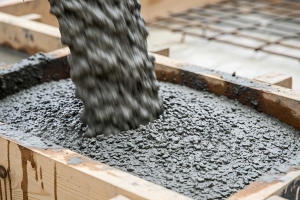 Fine white sand for concrete work should consist of particles ranging from 0.075mm to 4.75mm to achieve proper packing density. Medium-grade sand falls in the middle of this range and works best for most applications because it balances workability with strength.
When particles are too fine, you need more water to achieve workability, which compromises strength. Overly coarse sand doesn’t fill the spaces between aggregate particles effectively, leaving gaps that reduce density and create weak points under load.
The fineness modulus measures how coarse or fine your sand is on a standardized scale. Construction concrete requires values between 2.3 and 3.1, with medium sand hitting the middle of that range. You can verify this specification with your supplier to make sure that you’re getting consistent material.
Stone powder content below 10% ensures that cement can bond properly with sand particles. These fine particles, smaller than 0.075mm, actually help fill micro-spaces in concrete when kept within limits. However, excessive powder interferes with the chemical reactions between cement and water that create strength.
The Curing Process and Why It Matters
Concrete continues gaining strength for weeks after you pour it, which means proper curing determines whether your mix reaches its full potential. The chemical reaction between cement and water needs moisture and moderate temperatures to proceed correctly.
For the first seven days after placement, keep concrete surfaces moist by misting them with water or covering them with wet burlap. This prevents rapid moisture loss, which can prematurely halt the curing reaction and cause surface cracking.
Concrete reaches approximately 70% of its design strength within the first week, but the curing process continues for up to 28 days. During this period, protect concrete from extreme temperatures and maintain moisture levels for optimal strength development.
In Florida, though, the heat can cause the moisture on the concrete surface to evaporate faster than the interior can cure. This creates differential curing between the surface and interior, leading to shrinkage cracks that compromise durability.
Florida-Specific Mixing Considerations
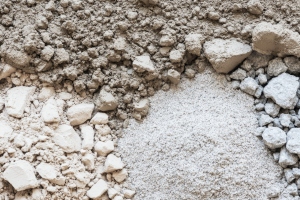 Florida’s year-round humidity creates challenges for concrete performance, affecting how you should mix sand and aggregate. High moisture levels mean you need sand with a strong mineral composition that resists degradation from constant wet-dry cycles.
Fine white sand with high silica content maintains its stability better than materials that break down when repeatedly exposed to moisture. Since Florida’s sandy soils can cause settlement, consistent particle grading in your sand helps concrete distribute loads evenly across foundations.
The occasional temperature swings might not be as severe as those in New York, for example, but they can still cause expansion and contraction that can lead to microcracking over the years. And that’s why you should resort to angular aggregate particles because they create better mechanical interlocking than smooth, rounded grains, which improves how well concrete handles these stress cycles.
It’s also essential to make sure that your fine white sand comes from mechanically screened sources rather than unprocessed deposits. Screening removes clay particles and organic matter that prevent proper cement bonding and introduce plasticity that weakens concrete under load.
Book Your Fine White Sand Delivery in Southwest Florida Today
Barclay Earth Depot‘s team has been helping Florida contractors source fine white sand and aggregate that meet exact specifications for concrete applications since 2007. Our specialists understand how particle size, mineral content, and grading affect concrete performance in Florida’s climate. Contact us today at (941) WE-DIG-IT or through our website to discuss your needs and to make sure that you’re working with materials engineered for lasting strength.