 Essential Takeaways
- Proper fill dirt selection and placement are your first line of defense for flood prevention on Lakeland, FL job sites.
- Sandy native soils in Central Florida drain fast but offer poor structural support, which is why engineered fill dirt matters.
- Compacting fill dirt in 6- to 8-inch lifts and maintaining a minimum 5% slope away from structures keeps water moving off-site.
- Soil testing before placing any fill dirt tells you exactly what material and compaction method the site needs.
- Layering clean fill dirt with proper grading eliminates the standing water problems that plague flat Florida terrain.
Standing water around a foundation or across a freshly graded site may point back to the wrong fill dirt, placed the wrong way. In Lakeland, FL, where summer storms routinely drop inches of rain in a single afternoon, flood prevention starts well before you pour concrete or lay sod. It starts with how you build up and shape the ground beneath everything else.
Lakeland sits on relatively flat terrain, with a high water table and sandy native soils that shift under load when saturated. That combination means water wants to pool, and it will find every low spot on your site. The right fill dirt, layered and graded correctly, gives that water a clear path off your property and away from anything structural.
Why Fill Dirt Selection Matters More in Central Florida
Not all fill dirt performs the same way once it’s in the ground. Clean fill, free of organic material, debris, and excess clay, compacts evenly and holds its shape through repeated wet-dry cycles. That matters here because Lakeland’s humid subtropical climate means your fill is going to get soaked regularly from May through October, then dry out, then get soaked again.
Fill dirt with too much organic content breaks down over time. As it decomposes, the ground settles unevenly, creating low spots where water collects. And fill with heavy clay content absorbs water and expands, then shrinks as it dries. That constant movement puts stress on anything sitting on top of it, including foundations, slabs, retaining walls, and pavement.
For flood prevention on sites in Lakeland, FL, you want a clean fill dirt with a balanced sand-and-soil composition that compacts well and resists moisture-related movement. Ask your supplier about the material’s composition and where it was sourced. A reputable aggregate supplier will know exactly what’s in their product and if it fits your application.
Layering and Compaction Techniques That Actually Work
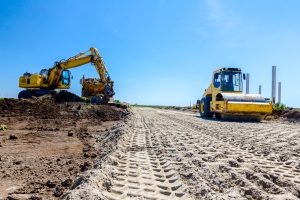 Dumping a truckload of fill dirt onto a site and spreading it flat won’t get you the drainage performance you need. Proper placement involves building up the grade in controlled lifts, 6 to 8 inches at a time, and compacting each layer before adding the next one.
Each lift needs to reach an adequate compaction density so it can support the weight above it and resist erosion during heavy rain. Skipping compaction or compacting a layer too thick creates air pockets and loose zones in the fill. Those weak spots settle after a few heavy storms, and suddenly you’ve got depressions collecting water right where you don’t want it.
Here’s a practical sequence that works well on Lakeland job sites:
- Strip and prep the subgrade. Remove topsoil and any organic material down to stable native soil.
- Place fill in even lifts. Spread 6 to 8 inches of clean fill dirt across the area.
- Compact each lift. Use a plate compactor for smaller areas or a roller for larger sites. Test density before moving on.
- Build your grade progressively. Each layer should maintain or improve the overall slope direction away from structures.
- Verify the final grade with a laser level. Eyeballing slopes on flat Florida terrain is a recipe for water pooling.
The goal is a stable, uniform base that moves water away from buildings and toward your drainage infrastructure, whether that’s swales, retention areas, or storm drains.
Getting the Slope Right for Flood Prevention
Grading is where fill dirt placement and flood prevention actually come together. The International Residential Code (IRC Section R401.3)requires a minimum 5% slope for graded ground away from foundation walls, which works out to 6 inches of drop within the first 10 feet. On flat Central Florida sites, even small deviations from that standard create problems.
Too little slope, and water pools against foundations. Too much, and you risk erosion that washes away fill and exposes root systems or utilities. For contractors working in Lakeland, FL, that 5% target is the baseline you need to hit for any graded fill dirt around structures.
The rules change slightly for hard surfaces. Impervious areas such as patios, driveways, and walkways within 10 feet of a foundation require a minimum 2% slope away from the building. So when you’re transitioning from graded fill to hardscape, you’re working with two different slope requirements on the same site.
If you’re grading a site now but the client plans to add hardscaping later, build the grade with those future additions in mind. Regrading after the fact costs significantly more, and you’ll need to make sure the transition between the 5% graded ground and the 2% hard surfaces continues to move water in the right direction.
Test Your Soil Before You Place a Single Load
 Running a soil test on the existing site conditions tells you what you’re working with before you bring in fill dirt. You’ll find out about clay content, organic matter, moisture levels, and bearing capacity, all of which affect the type of fill you need and the compaction effort required for each lift.
In Lakeland, sandy soils are common, and they drain quickly on their own. But fast drainage doesn’t equal stability. Sandy subgrades can shift under heavy loads, especially when water moves through them. A soil test helps you choose fill dirt that complements the existing conditions and creates a stable, well-draining foundation.
Barclay Earth Depot Helps Lakeland Contractors Get Fill Dirt Right
Barclay Earth Depot has supplied clean fill dirt to contractors and developers in Lakeland, FL, since 2007, backed by a team with 80+ years of combined excavation experience. That hands-on knowledge means you get material recommendations based on your actual site conditions, not guesswork.
Barclay Earth Depot delivers the product quality and project consultation that Lakeland contractors count on for flood prevention and long-term site stability. Contact us today at (941) WE-DIG-IT or reach out online to discuss your project needs.