
 Essential Takeaways
-
- Fine white sand’s silica purity provides chemical resistance in Florida’s humid, acidic environment.
- Angular white concrete sand delivers comparable strength to standard construction sand in structural applications.
- Mason sand (fine white) excels in finishing work, while white concrete sand handles load-bearing requirements.
- Material selection depends on particle size and angularity, not color alone.
- Florida’s climate conditions favor silica-based materials that resist weathering and chemical degradation.
Concrete that develops surface scaling after two years or mortar joints that crumble prematurely usually trace back to sand selection errors made during the procurement phase. And the choice between fine white sand and regular construction sand affects more than just your material invoice. It determines structural performance, long-term durability, and whether you’ll have costly repairs down the line. Here’s how each material performs in real-world construction conditions and which one delivers better value for different project types.
Composition Differences That Affect Performance
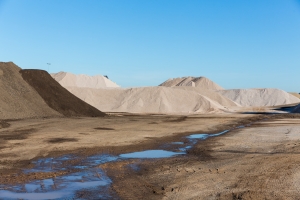
Fine white sand consists primarily of silica or quartz particles that have been processed to remove impurities and achieve uniform grain sizes. Its high silica content gives it a clean appearance and predictable behavior in mixtures, which is why it appears in applications where consistency matters most. However, white sand comes in different grades, and the color itself doesn’t determine structural capability.
Regular construction sand comes from crushing rock formations or collecting material from natural deposits. The composition varies based on source geology. Some contain limestone, feldspar, or mixed minerals, along with silica. The particles typically have angular shapes from mechanical crushing, which creates better mechanical interlock when mixed with cement.
The particle size distribution works differently across sand types. Mason sand (often white and fine) provides uniform, smaller particles for finishing work. White concrete sand offers coarser, angular particles processed specifically for structural applications. Standard construction sand ranges from fine to coarse particles, and this variety helps fill voids effectively in concrete mixes.
Structural Performance in Florida Conditions
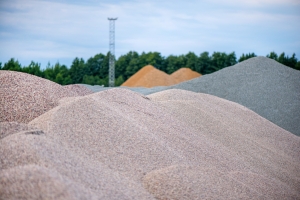 Angular white concrete sand performs just as well as standard construction sand in load-bearing applications when properly graded. The angular particles lock together under compression regardless of color. When you’re pouring foundations or building retaining walls, you need that mechanical interlocking to prevent settlement and shifting. White concrete sand processed for structural use delivers the same density and compression strength as brown construction sand.
However, fine mason sand (often white) offers better workability for non-structural applications. The smaller, more uniform particles make it easier to achieve smooth finishes in plastering and rendering work. And because quality white sand contains minimal clay or silt, it doesn’t interfere with cement hydration the way contaminated sand can.
In Florida’s humid, acidic environment, silica-based white sand resists chemical weathering better than limestone-heavy construction sands. The chemical inertness of pure silica means it maintains stability through wet-dry cycles without degrading or causing efflorescence staining. This resistance to Florida’s environmental conditions reduces long-term maintenance needs and prevents the surface deterioration you see with reactive mineral content.
Cost Analysis for Central Florida Projects
White sand typically costs more than regular construction sand at the wholesale level. That price difference stems from the additional processing required to achieve its clean appearance and high purity. For mid-size commercial projects requiring substantial quantities, the material cost difference adds up quickly.
But the cost comparison goes beyond the initial purchase price. White sand’s high silica purity means you’ll see more consistent results across batches, which reduces waste from rejected mixes or uneven finishes. Construction sand may require adjustments to your mix designs as you work through different loads, particularly if sourced from multiple locations with varying mineral content.
Transportation costs also factor into value assessment. Because Barclay Earth Depot sources materials locally throughout Central Florida, delivery expenses stay manageable for both sand types. Projects farther from sand deposits have higher transportation costs, which can significantly shift the value equation.
Application-Specific Value Propositions
For structural concrete work, white concrete sand delivers comparable performance to standard construction sand when properly graded with angular particles. The high silica content actually provides superior chemical resistance, which matters in Florida’s acidic soil and humid conditions. This makes it particularly valuable for exposed architectural concrete where both strength and appearance matter.
Fine white mason sand is ideal for specialized applications such as plastering, stucco work, and mortar joints where smooth finishes matter. The uniform particle sizing creates surfaces that require less finishing labor. It’s also the better choice for projects requiring precise color matching or where aesthetic considerations matter as much as structural requirements.
In subsurface applications where appearance doesn’t matter, such as foundation backfill, pipe bedding, or structural fill, paying extra for white sand doesn’t deliver measurable value. Standard construction sand handles these applications effectively at a lower cost. However, for any application exposed to Florida’s weather and soil chemistry, white silica sand’s resistance to chemical degradation provides long-term value through reduced maintenance and longer service life.
Your Project Budget: Selecting the Proper Sand
 The value proposition depends on particle size and application requirements, not just color. If you’re building foundations, pouring structural slabs, or mixing concrete for load-bearing walls, properly graded white concrete sand performs comparably to standard construction sand. The angular particles and appropriate sizing create strong concrete that meets code requirements throughout Central Florida’s building jurisdictions.
Fine white mason sand works best for finishing applications, plastering, and mortar work where smooth surfaces matter. But for structural concrete, you need coarser, angular particles, no matter if you opt for white or brown sand. The fundamental difference lies in silica purity and chemical resistance, where white sand outperforms limestone-heavy alternatives in Florida’s acidic environment.
For most commercial construction in Lakeland, Punta Gorda, and surrounding areas, the decision comes down to exposure conditions and aesthetic requirements. Architectural concrete and exposed applications benefit from white sand’s appearance and chemical resistance. Subsurface work where appearance doesn’t matter gets handled cost-effectively with standard construction sand that meets FDOT specifications.
Connect with Our Sand Aggregate Experts
Barclay Earth Depot‘s team brings 80+ years of combined excavation experience to help you choose materials that match your project requirements without overpaying for unnecessary specifications. We understand Florida’s construction conditions and can guide you toward sand grades that deliver long-term performance at competitive prices. Contact us today at (941) WE-DIG-IT or online to discuss your specific needs and work with materials sourced right here in Central Florida.