 Essential Takeaways
- Impure aggregates produce specific, diagnosable failures, including map cracking, popouts, scaling, and surface dusting on sand aggregate.
- Silt and clay above acceptable limits reduce compressive strength and create porous concrete prone to water damage.
- Organic and hydrocarbon contamination can cut concrete compressive strength by 12% to 28%.
- On-site stockpile inspection catches contamination through discoloration, clumping, debris, and odor.
- Washed sand aggregate meeting gradation and purity specs is the most reliable way to prevent failure.
When concrete starts cracking in patterns that don’t match structural overload, or popouts begin scattering across a recently poured slab, the cause often traces back to the sand aggregate rather than the cement. Aggregate quality in concrete drives most long-term concrete durability issues, and contaminated sand aggregate introduces failures that surface months or years after the pour. Knowing the early warning signs and understanding what impurities actually do inside the mix gives you a way to prevent expensive structural concrete problems before they spread.
How Impure Aggregates Damage Concrete
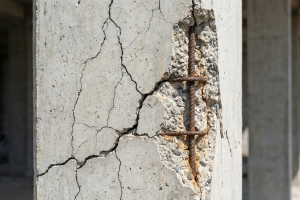
Impure aggregates, along with incorrect water-to-cement ratios and insufficient cement, rank as primary drivers of reinforced concrete deterioration. Damage happens at the chemical and physical level. Reactive silica or impure carbonates can react with alkali hydroxides in the cement pore fluid, producing expansive gels that exert internal pressure and crack the concrete from within. This shows up as alkali-silica reaction (ASR) or alkali-carbonate reaction (ACR), and both produce progressive cracking that no surface repair can stop. The result is an earlier onset of scaling, cracking, and reduced service life, which are the most common concrete durability issues tied directly to aggregate quality.
Contaminated aggregates also raise overall porosity and water absorption, meaning concrete that tests fine at 28 days can still fail durability checks because impurities make the matrix more vulnerable to moisture intrusion over time.
Visual Signs of Aggregate-Related Concrete Defects
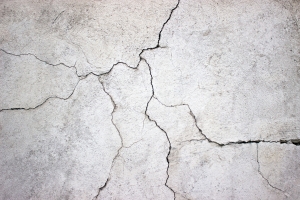 Identifying concrete defects caused by aggregate problems comes down to recognizing patterns that don’t match typical structural failure. The most common visual cues include:
- Map or pattern cracking without obvious structural overload, often signaling alkali-aggregate reaction
- Popouts where small, conical pits appear above weak or porous aggregate particles
- Surface scaling and pitting that worsen with moisture exposure
- Efflorescence and gel exudation at crack edges, a signature of ASR
- Disintegration and surface dusting that wipes off on contact, commonly seen on slab surfaces and exposed flatwork
Map cracking is a particularly strong indicator that the aggregate brought reactive or impure components into the mix. Field documentation from the U.S. Society on Dams catalogs disintegration, scaling, cracking, efflorescence, erosion, spalling, and popouts as the standard set of aggregate-related symptoms in deployed concrete. Choosing the right sand aggregate at the source eliminates most of these failure patterns before they develop.
Silt, Clay, and Organic Contamination
Silt and clay are among the most common causes of faulty concrete in unwashed sand, and they create two separate problems. Clay particles absorb water and expand, then shrink during drying, which produces micro-fractures inside the cement paste. High silt content increases water demand in the mix, diluting cement bonding and lowering compressive strength.
Organic contamination is even more damaging. A study published in the National Library of Medicine found that concrete exposed to organic contamination lost roughly 12% to 20% of its compressive strength. In contrast, hydrocarbon contamination, such as diesel, pushed losses to 22% to 28%. Although statistics vary depending on the study and contamination level, even small amounts of decaying plant matter, peat, or fuel residue in aggregate stockpiles disrupt cement hydration, producing concrete that looks fine on the surface but fails under load. The breakdown of how clean construction sand improves performance covers the impact on strength in more detail.
Construction Material Inspection at the Stockpile
Most contamination is visible if you know what to look for. Effective construction material inspection starts at the stockpile, before any sand reaches a batch plant. Look for:
- Visible silt lenses or dark layers running through the pile
- Clumping when wet, which signals high clay content
- Color inconsistencies, dark streaks, or muddy patches
- Debris such as roots, leaves, peat, or construction litter
- Strong odors that suggest fuel or chemical contamination
A bottle test catches excess fines fast. Place a sand sample in a clear jar, fill with water, shake, and let it settle. Silt and clay will form a distinct layer on top of the sand. If that layer is more than about 5% of the total volume, the sand probably won’t meet specs for structural concrete. Projects with tighter tolerances benefit from independent concrete testing and quality verification through ASTM gradation, sand equivalent, and organic impurity tests.
Preventing Concrete Failure With Washed Sand
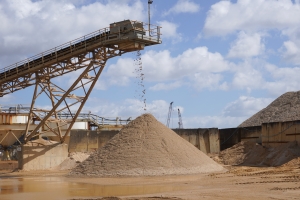 Preventing concrete failure starts with sourcing sand aggregate that has already been processed to remove the contaminants above. Washed sand has been mechanically scrubbed to remove silt, clay, organic matter, and salts, so the material arriving at your site has already cleared the most common contamination thresholds. By controlling porosity and water absorption from the start, washed sand produces a denser, less permeable cement matrix that resists the moisture-driven failures behind most long-term durability problems. Usable stone powder content stays within healthy limits, and harmful fines stay out, which is the balance you want for predictable concrete performance. For matching sand grade to project type, our guide on choosing the right construction sand covers the main variables.
In Florida’s humid, coastal climate, constant moisture cycling and salt exposure exploit every weakness in your aggregate, so impure sand that might perform adequately in drier regions breaks down faster here, which makes clean material non-negotiable for long-term durability.
Get Quality Sand Aggregate From Barclay Earth Depot
Working with Barclay Earth Depot means you get sand aggregate that’s already been cleaned, screened, and graded to meet your project’s spec requirements. You skip the contamination guesswork, avoid callbacks from failed concrete, and keep timelines intact because the material performs as the spec sheet says it will. Contact us today at (941) WE-DIG-IT or online to order washed sand aggregate that protects your build from the start.