 Essential Takeaways
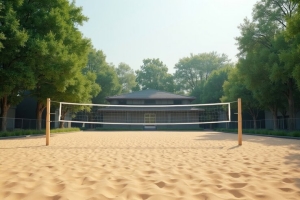
- Washed, rounded sand with uniform grain size performs best on commercial playgrounds, volleyball courts, and recreation spaces.
- Routine raking, sifting, and depth checks prevent compaction, contamination, and safety violations.
- A properly built base of gravel and geotextile fabric protects drainage and slows sand migration.
- Florida heat, humidity, and rainfall require scheduled top-offs to replace material lost to wind and runoff.
- Bulk sand supply from a local source keeps deliveries efficient and surface depth consistent year-round.
Commercial sand surfaces fail faster than most property managers expect. By the time someone notices a compacted volleyball court, a shallow playground fall zone, or a contaminated sandbox, the property has usually received complaints, potential safety violations, or insurance issues. Commercial sand maintenance follows a predictable rhythm, and sand for outdoor areas remains usable year-round when you choose the right material up front and follow a steady schedule.
Start With Sand Built for Heavy Use
The sand you buy determines how much maintenance you’ll need. For playgrounds and recreation courts, you want washed sand with rounded grains and minimal dust, since sharp or angular particles cause skin abrasions and feel rough underfoot. Uniform grain size also matters because consistent particles pack predictably, drain well after rain, and resist the settling that creates ruts.
For Florida properties, two additional factors come into play. Light-colored sand absorbs less heat in summer, reducing the risk of burns on bare feet. Sterilized sand also prevents fire ant colonies and mold growth, both of which take hold quickly in humid conditions. You can review the available grades on the aggregate products page when scoping a new install or refresh.
Build a Base That Stops Drainage Problems
A proper base keeps your top sand clean and your surface stable. For volleyball courts and recreation areas, excavate to a depth of 12 to 18 inches, then add a gravel layer for stability and moisture control. Place a geotextile fabric between the gravel and the playing sand. This prevents the surface sand from mixing with the base material below, which is one of the biggest causes of contamination on long-running commercial courts.
Edging matters more than it gets credit for. High-traffic zones such as slide exits and under swings lose sand quickly when borders are missing or broken. Intact edging keeps fall-zone depth where it needs to be and reduces how often you have to top off material in those spots.
During installation, lightly water and tamp the sand to compact it evenly. This early compaction reduces settling later and gives you a more stable surface from day one.
Set a Routine for Sand Upkeep
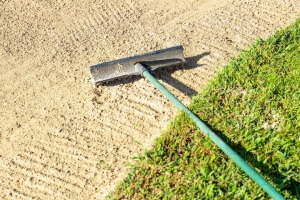 Routine maintenance is where most commercial sand surfaces succeed or fail. Volleyball courts need raking and leveling several times per week to prevent compaction and keep the surface playable. Playgrounds need depth inspections in fall zones, since the U.S. Consumer Product Safety Commission recommends maintaining at least about 9 inches of loose-fill surfacing such as sand under and around play equipment, with exact depths depending on the equipment’s fall height.
Sifting matters too. Professional sand-sifting machines remove debris, glass, and other contamination that builds up in commercial play areas. Most properties benefit from regular sifting, such as monthly in slower periods and more often during peak season, to stay ahead of debris and contamination.
Sandbox sand on commercial properties should be fully replaced at least once per busy season, and more often if contamination is heavy. This is especially true for childcare facilities, where hygiene standards are higher, and the consequences of skipping replacement are more serious. For background on selecting material for these refreshes, this guide on choosing play sand for Florida playgrounds covers the specs that hold up in commercial settings.
Plan for Florida-Specific Maintenance Issues
Florida’s climate creates maintenance challenges that drier regions don’t experience. Constant humidity keeps sand damp, accelerating compaction and creating conditions for mold. Heavy rain washes sand out of low-edge areas, and summer storms can move significant volumes in a single afternoon.
The fix is a planned top-off schedule. Beach managers have used sand replenishment for decades to address the same problem on a larger scale, and the principle applies to commercial properties as well. Calculate your average annual loss based on inspection records, then schedule deliveries to maintain depth before it falls below safe levels.
Source Bulk Sand Without Logistics Headaches
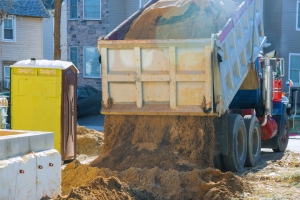 Bulk sand supply is more cost-effective than bagged retail for commercial-scale upkeep, but only if you measure your spaces accurately and plan deliveries around your maintenance calendar. Calculate the length, width, and depth for each area, then add a buffer to account for natural losses between deliveries. This approach cuts delivery surcharges and keeps your crew from running out of material mid-project.
A good supplier will also help you match the sand grade to the application. Beach-grade sand for play areas, washed masonry sand for volleyball courts, and utility sand for base layers each have different specs, so using the wrong grade is a common reason commercial sand surfaces underperform. This handbook on sand selection and application breaks down which sand is best for which use.
Get Reliable Commercial Sand Supply From Barclay Earth Depot
Barclay Earth Depot brings 80+ years of combined excavation experience to commercial sand supply across Central and Southwest Florida. Our team can help you spec the right material for playgrounds, courts, and recreation areas, and bulk delivery keeps your maintenance schedule on track without the cost of multiple small orders. Contact us today at (941) WE-DIG-IT or online to set up a delivery schedule that fits your property’s needs.