 Essential Takeaways
- Florida’s sugar sand gets its white color from quartz that has been purified over millions of years, producing grains that are 97% to 99% pure silica.
- White quartz sand stays cool underfoot because it reflects solar radiation, directly affecting guest comfort at resort properties.
- Beach and waterfront experiences are the top activities for domestic visitors to Florida, making sand quality a measurable factor in hospitality performance.
- Bulk beach sand with high silica content and consistent grading allows developers to recreate the sugar-sand experience anywhere in the state.
- Mineral purity, grain uniformity, and color consistency are what separate a premium sand result from a disappointing one.
When a resort guest kicks off their shoes and steps onto sand that’s gritty, gray, or burning hot, that first impression sticks. In Florida’s hospitality market, where beach and waterfront experiences drive more visitor activity than any other category, the sand under your guests’ feet has more influence on their experience than most developers realize. If you’re building or renovating a luxury hospitality project, sourcing the right bulk beach sand should be on your radar long before you break ground.
What Makes Sugar Sand Different From Standard Beach Sand
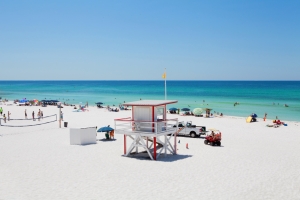
The sand that draws millions to Florida’s Gulf Coast originated in the Appalachian Mountains. Over millions of years, weathering broke down rock and released quartz crystals, which river systems carried south toward the Gulf. That slow path through warm, humid conditions stripped away softer minerals, iron coatings, and clay. What remained was almost pure silicon dioxide, which is sand that’s 97% to 99% quartz. That purity gives it the bright white color and fine, uniform texture.
For hospitality, purity controls color, texture, and temperature. Darker sands contain iron and heavy minerals that absorb sunlight and heat up fast. White quartz reflects solar radiation, so it stays noticeably cooler on a 95-degree afternoon. For resort pool decks, beach areas, and barefoot walkways, that temperature difference directly affects guest comfort.
Florida’s Beach Economy By the Numbers
Florida welcomed 143 million visitors in 2024, setting a new record and generating $133.6 billion in economic impact. According to VISIT FLORIDA research, beach and waterfront activities ranked as the most popular domestic visitor activity at 34%, ahead of dining, shopping, and theme parks.
A third of domestic visitors are coming for the beach experience. For developers investing in luxury hospitality, that puts sand quality squarely in the conversation about property value. If guests are paying premium rates for a beachfront stay, the sand becomes part of the product you’re selling.
How White Quartz Sand Shapes the Guest Experience
 When sunlight hits pure quartz grains, it bounces upward instead of being absorbed. In shallow water features and coastal areas, this reflected light scatters blue and green wavelengths, which is why water near white sand appears turquoise or emerald. That contrast between white sand and bright water is what guests photograph, post, and share.
There’s the tactile side, too. High-purity quartz with fine, uniform grains feels soft and powdery underfoot, while coarser or mixed-composition sands feel rough and compact unevenly. For resort landscaping and outdoor areas, that softness matters. Guests walking barefoot from the pool to a cabana notice the difference even if they can’t name what they’re feeling. And in a market where social media posts reach thousands of potential guests, the visual quality of your outdoor areas has real marketing value once the right material is installed.
What To Look for When Sourcing Bulk Beach Sand
When ordering bulk beach sand for a hospitality project, focus on three things:
-
- Mineral composition: High silica content with minimal iron, clay, or organic material. Iron creates brown staining over time, and clay absorbs water and turns to mud in wet conditions.
<li
>Grain consistency:
- Uniform particle sizes create the soft, powdery feel. Mixed sizes compact differently, leaving some areas firm while others sink. Mechanically screened sand delivers much better consistency than unscreened material.
- Color uniformity: Sand that looks white in a sample bag can appear patchy across a large area if the grains aren’t consistently pure. Ask suppliers about screening methods that maintain batch-to-batch consistency.
Drainage matters, too. High-purity quartz drains well after Florida’s frequent thunderstorms, so beach areas recover quickly instead of turning into standing puddles. Poorly draining sand compacts and grows mold in humid conditions, and those are problems you don’t want at a luxury property.
Build the Beach Experience With Barclay Earth Depot
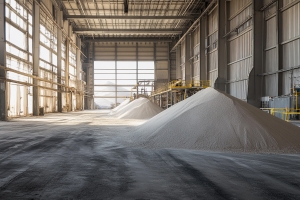 Florida’s hospitality guests are already comparing your property to the sugar sand beaches they’ve walked on. White Prestige Sand from Barclay Earth Depot gives developers the material to meet that expectation. It’s high-purity quartz with consistent color, uniform grading, and the mineral composition that keeps bulk beach sand cool and bright across large-scale installations.
If you’re speccing sand for a resort pool area, a beachfront walkway, or a full outdoor build, Barclay’s team has been helping Florida developers get the right material since 2007, backed by 80+ years of combined excavation knowledge. Contact us at (941) WE-DIG-IT or online and tell us what you’re building.