 Essential Takeaways
- Crushed concrete’s angular particles lock together more tightly than rounded gravel, making it more resistant to rutting and washout as lakeland aggregate.
- Proper regrading with a crowned center is the most important step before adding any new material.
- Spreading aggregate in thin compacted layers produces a denser, longer-lasting surface than dumping it all at once.
- Good drainage through side ditches and swales prevents repeat washouts after seasonal Florida storms.
- Annual grading and post-storm inspections keep your repaired driveway performing for years.
A rutted, washed-out driveway gets worse with every rain. Each storm cuts deeper channels and spreads loose material into your yard. For rural property owners around Polk City and Mulberry, seasonal Florida downpours can turn a manageable driveway problem into a full access issue for farm equipment and delivery trucks in a single wet season. Crushed concrete is one of the most practical solutions for washed-out driveways in these conditions, and with the right approach to DIY driveway repair, you can build a surface that holds up under heavy loads and heavy rain.
Why Crushed Concrete Works as a Driveway Erosion Fix
Unlike natural gravel, which tends to be smooth and rounded, crushed stone has angular, irregular edges that interlock when compacted. This mechanical bond between particles is what gives crushed concrete its stability under load. Rounded gravel shifts and migrates when tires roll over it, or water runs across the surface, but angular crushed concrete pieces grip each other and resist movement.
That interlock also makes crushed concrete a strong option for driveway erosion prevention in rainy climates. The gaps between particles allow rainwater to drain through rather than pooling on the surface, reducing surface runoff that causes washouts. And because crushed concrete is a recycled product made from demolished structures, it typically costs less than virgin Lakeland aggregates, making it a cost-effective driveway repair option for long rural driveways.
Assess Your Driveway Before You Start
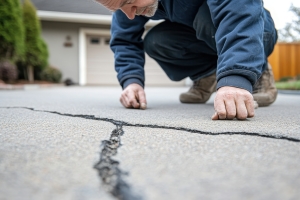 Before ordering material or firing up equipment, walk your entire driveway and look for low spots where water collects, ruts worn into the wheel tracks, and channels where rainwater has carved through the surface.
Then decide whether the damage warrants a full regrade or targeted spot repairs. If the entire driveway has lost its shape and water runs straight down the center instead of shedding to the sides, a complete regrade is the better investment. Patching individual spots on a driveway with no crown will just wash out again.
Regrade the Subgrade and Build a Crown
Driveway restoration starts below the surface. Dumping new material on a damaged base is a temporary fix that won’t hold up during the next heavy rain.
Start by smoothing out all ruts and filling low spots to create an even surface. Then shape a slight crown in the surface center so the middle of the driveway sits a bit higher than the sides. This directs water off to both sides rather than letting it pool in the wheel tracks.
Once you’ve shaped the subgrade, thoroughly compact it with a plate compactor or roller before adding any aggregate. If the subgrade stays loose, your crushed concrete layer will shift and settle no matter how well you install it.
Also, check that water has somewhere to go once it leaves the surface. Clear out existing side ditches or dig new swales along the edges. If your driveway crosses a low area, a culvert pipe underneath can prevent water from backing up and eroding the surface.
Spread Crushed Concrete in Compacted Lifts
Crushed concrete installation is where most DIY projects succeed or fail. The biggest mistake is dumping a thick layer of material and only compacting the top, which leaves the bottom loose and prone to shifting.
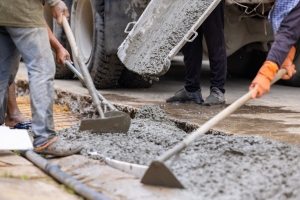
Instead, spread your crushed concrete in lifts of roughly 3 inches at a time. Grade each lift to maintain your crown, then compact it before adding the next layer. This builds density from the bottom up and creates a tightly locked surface that resists both heavy equipment and heavy rain.
For material sizing, look for crushed concrete sold as 1½ inch down to fines. This blend of larger angular pieces and smaller particles fills gaps during compaction and produces a dense, interlocked layer. If you’re working without heavy equipment, tackle short sections at a time to maintain consistent slopes and crown throughout the project.
Seasonal Driveway Maintenance Tips for Florida Properties
 Even a well-built crushed concrete driveway needs regular attention. Annual grading to refresh the crown shape is one of the most effective, durable driveway solutions for properties that handle regular truck or equipment traffic.
After major storms, walk your driveway and check for new channels, soft spots, or standing water. Catching small problems early with a quick regrade or spot fill prevents them from becoming full washouts.
Keep side ditches and culverts clear of debris so water continues to flow away from the driving surface. Vegetation growing along adjacent slopes also helps slow runoff before it reaches the aggregate.
For steep sections or high-traffic areas, choosing the right aggregate size matters. A proper blend of coarse and fine material compacts more effectively than uniform-sized particles and holds up better over time. Addressing the actual causes of erosion is what separates a lasting driveway erosion fix from a repair you’ll redo next year.
Get the Right Crushed Concrete for Your Project From Barclay Earth Depot
Picking the right crushed concrete grade and quantity makes the difference between a repair that lasts and one that washes out after the next storm. Barclay Earth Depot’s aggregate professionals help you figure out the exact material specifications for your property’s soil conditions, traffic patterns, and drainage needs, so you get a product that fits your project every time. Contact us today at (941) WE-DIG-IT or online to discuss your driveway repair and get the right Lakeland aggregates delivered to your site.