 Essential Takeaways
- Calculate volume using length × width × depth in feet, then divide by 27 for cubic yards.
- Add 10-15% to your totals for compaction shrinkage in Lakeland’s sandy soils.
- Fill dirt weighs approximately 1.21 tons per cubic yard; dry sand weighs approximately 1.35 tons per cubic yard.
- Account for the depth of organic soil removal before calculating fill requirements.
- Flood zone elevation requirements in Lakeland often demand a geotechnical review for fills over 12 inches.
Ordering too much fill dirt means you’re paying for material you’ll never use and dealing with disposal costs. Ordering too little shuts down your job while you wait for another delivery, delaying your timeline and frustrating everyone involved. And for large construction sites in Lakeland, where you’re moving hundreds of cubic yards, these estimation errors quickly turn into five-figure mistakes.
Getting your fill dirt and aggregate sand quantities right from the start keeps your project on schedule and on budget. Here’s how to calculate what you actually need for Lakeland construction conditions.
Start With the Basic Volume Formula
The foundation of any material estimate starts with a simple volume calculation. Multiply your area’s length by its width by the depth you need to fill, all measured in feet. This gives you cubic feet, which then converts to cubic yards by dividing by 27.
For example, if you’re filling a 100-foot by 50-foot lot to a depth of 2 feet, you get 10,000 cubic feet. Divide that by 27, and you’re looking at roughly 370 cubic yards. However, this is just your starting point because Lakeland’s soil conditions require additional adjustments.
The depth measurement matters more than contractors sometimes realize. Make sure you’re measuring from the actual grade level after any required excavation, not from the existing surface if you need to remove topsoil first.
Account for Lakeland’s Compaction Requirements
Sandy soils common throughout Central Florida lose volume when compacted, which is why you can’t just order the calculated cubic yards and expect them to fill your space. Research conducted for the Florida Department of Transportation shows that Lakeland’s Type A-3 sandy soils typically shrink by 15% to 20% during compaction.
Thus, you need to add this shrinkage factor to your base calculation. Take your 370 cubic yards and multiply by 1.15 to account for 15% shrinkage, which brings you to roughly 426 cubic yards of loose material needed to achieve your target compacted volume.
Without this adjustment, you’ll come up short on material right when you’re trying to reach the final grade. And bringing in additional loads mid-project costs more per yard than ordering the correct amount upfront.
Calculate Required Tonnage
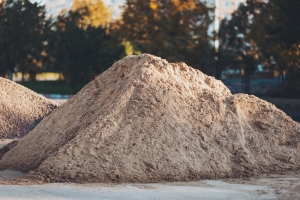 Suppliers often price materials by the ton rather than by the cubic yard, so you’ll need to convert your volume estimate. Fill dirt in Florida weighs approximately 1.21 tons per cubic yard, while dry sand weighs approximately 1.35 tons per cubic yard.
Using the previous example of 426 cubic yards of fill dirt, multiply by 1.21 to get roughly 515 tons required. If you’re working with sand instead, that same 426 cubic yards converts to about 575 tons at the higher density.
Keep in mind that moisture significantly affects these weights. Wet sand can weigh up to 1.62 tons per cubic yard, which matters for transportation logistics even though you’re purchasing by dry weight. Your trucks need to handle the actual load weight, not just the specification weight.
Factor in Organic Soil Removal
Before you can place any fill in Lakeland, you typically need to strip the existing topsoil, where organic content makes the surface soils unsuitable for structural support. This peaty “muck” layer often extends 6 to 12 inches deep and must be removed entirely before fill placement begins.
Calculate this removal volume using the same length-width-depth formula. If you’re stripping 8 inches (0.67 feet) from that same 100-by-50-foot lot, you’re removing an additional 124 cubic yards that need to be hauled away. More importantly, this creates a deeper deficit to fill than your original 2-foot target, so your actual fill depth becomes 2.67 feet instead.
This adjustment significantly impacts your material quantities. That deeper fill requirement changes your volume from 370 cubic yards to roughly 495 cubic yards before compaction factors, which then becomes about 570 cubic yards after adding shrinkage allowance.
Address Flood Zone Elevation Requirements
Lakeland construction frequently involves raising site elevation to meet flood zone requirements, which adds another layer to your estimation process. The Florida Building Code requires geotechnical investigation when fill depths exceed 12 inches in many situations, and your engineer’s recommendations will affect how you calculate materials.
Sandy clay mixes often work better than pure sand or pure clay for these elevation projects. Pure clay holds too much water and creates stability problems in Florida’s climate, while pure sand won’t compact adequately without proper containment systems. Your material choice affects density calculations, so make sure you’re using the correct tons-per-cubic-yard figure for whatever mix your engineer specifies.
Also, elevation requirements sometimes mean you’re filling much deeper than typical grading work. A site that needs to rise 3 or 4 feet to meet base flood elevation will require significantly more material and more careful compaction planning than standard grading.
Use Aggregates for Drainage Layers
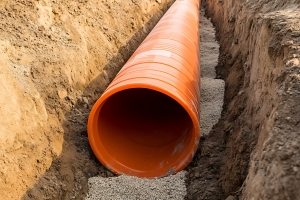 Large construction projects often require aggregate sand or crushed stone for drainage layers beneath structures or around foundations. These materials calculate the same way as fill dirt, but you’ll use different density figures.
Standard limestone aggregate typically weighs between 1.15 and 1.28 tons per cubic yard, depending on the specific gradation. If your drainage layer specification calls for 4 inches of aggregate beneath a concrete slab, calculate that volume separately from your fill dirt requirements and convert it using the appropriate aggregate density.
Drainage layers don’t typically require the same compaction factors as structural fill since they’re designed to remain somewhat porous. However, you still want consistent material throughout, which is why you should account for about 5% extra to ensure complete coverage without thin spots.
Work With Experienced Aggregate Suppliers in Lakeland, FL
Barclay Earth Depot‘s team has been helping Lakeland contractors for years to get their material estimates right the first time. We comprehend how Central Florida’s sandy soils, flood zone requirements, and humid climate affect your material quantities. We can help you factor in the proper adjustments for compaction, organic soil removal, and elevation requirements. Contact us today at (941) WE-DIG-IT or online to discuss your project specifications and make sure you’re ordering exactly what you need.