 Essential Takeaways
- Aggregate fills 60 to 75% of concrete volume, so its quality controls strength, shrinkage, and crack resistance more than any other ingredient.
- Clean, well-graded aggregates reduce a mix’s water demand, thereby reducing shrinkage cracking.
- Angular crushed stone provides high compressive strength for structural work, while properly sized maximum cuts reduce paste volume and shrinkage.
- A compacted, uniform base prevents the settlement that causes cracks two to three years after a pour.
- Florida heat, humidity, and coastal chlorides raise the stakes on aggregate cleanliness, durability, and proper curing.
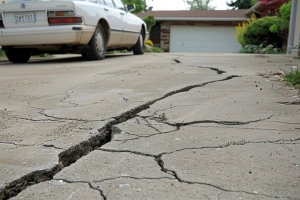
When a slab cracks within its first year or a driveway splits along a random line, the cause usually traces back to the materials underneath the finish, not the finishing work itself. Aggregate makes up the bulk of every concrete mix, so the stone and sand you choose determine how the slab holds up long after the crew leaves. These eight tips show you how to prevent concrete cracks by selecting and handling quality aggregates for concrete, with attention to the conditions Florida projects encounter.
Start With the Water-to-Cement Ratio
Excess water is the most common reason concrete shrinks and cracks as it cures. As the extra water evaporates, the slab loses volume and pulls against itself, which is where shrinkage cracks form. A water-to-cement ratio in the 0.40 to 0.50 range gives you durable, crack-resistant concrete for most work. A wetter mix is easier to place, but you pay for that convenience later in surface cracks. If you need more workability, a water-reducing admixture lets you keep the water content low without fighting a stiff mix.
Match the Aggregate Type to the Job
Angular crushed stone interlocks tightly and provides the high compressive strength that structural concrete needs, making it a better choice for foundations and load-bearing slabs. Rounded gravel works well for a decorative exposed-aggregate finish. The shape matters because angular particles bond more firmly with cement paste, resulting in stronger, longer-lasting concrete from the same volume of material.
Get the Aggregate Size Right
Maximum aggregate size affects how much cement paste your mix needs. A larger maximum size reduces the total paste volume, and less paste means less shrinkage, which limits cracking. Around 20 mm is typical for general construction, with 10 to 14 mm common in residential work. The right size balances workability and strength, as long as the spacing and cover allow you to place and consolidate the concrete properly.
Use Well-Graded, Clean Aggregates
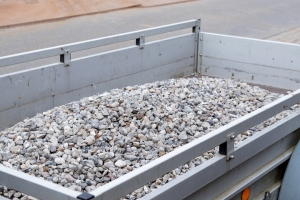 Well-graded aggregate carries a range of particle sizes that pack together and fill voids, which lets you use less paste and water. That alone lowers shrinkage and crack risk. The opposite case causes problems: a mix with too much fine material requires far more water to remain workable, and that water leads to shrinkage cracks. Contamination is the other half of the equation. Clay, silt, and organic matter interfere with the cement bond and create weak zones where cracks start, so the aggregate should be washed and cleaned. Poorly graded material also tends to segregate during placement, leaving honeycombing and crack-prone spots. A visual inspection of shape, size, and color at delivery catches most of these issues before they reach your forms.
Design the Mix for the Application
Quality materials in the right proportions are the foundation of crack-free concrete. A sound mix design balances cement, water, aggregate, and admixtures to meet the strength, workability, and durability required by the specific job and environment. Where you can trim cement content while still meeting strength targets, you lower the heat of hydration and the associated shrinkage. Supplementary materials such as fly ash or slag help control heat and improve long-term durability, thereby enhancing crack resistance over the life of the slab.
Prepare the Subgrade and Base
A slab is only as stable as what sits beneath it. Poorly compacted fill, decomposing roots, or a recently backfilled utility trench all consolidate over time, and that settlement pulls the slab apart. Compacting and leveling the subgrade prevents that movement. A layer of crushed stone or gravel under the slab adds support and promotes drainage, so water does not collect and soften the ground. Keep the base uniformly moist before pouring, since a bone-dry subgrade draws water from the fresh concrete and can trigger plastic shrinkage cracks at the surface.
Add Joints and Reinforcement
Concrete will crack, so the goal is to control where it cracks. Control joints create planned planes of weakness that direct cracks along straight lines instead of letting them wander. Space them at roughly 24-30 times the slab thickness. Expansion joints made of compressible material absorb movement caused by Florida’s temperature swings. Steel reinforcement, such as rebar or wire mesh, keeps crack widths tight and distributes them, while fibers help resist surface and shrinkage cracking. Where concrete is cast against the ground, keep at least about 3 inches of cover over the steel to protect it.
Place, Finish, and Cure Correctly
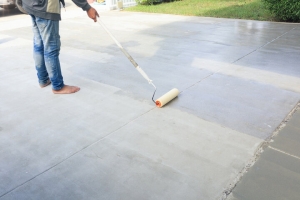 Even a strong mix cracks if it is handled poorly at the end. Limit the drop height when placing concrete to avoid segregation and establish full consolidation. Do not work the surface while the bleed water is still sitting on top, because finishing too early traps that water and weakens the top layer. Once finishing is done, start curing right away with water, wet burlap, a curing compound, or plastic sheeting to slow moisture loss. Plan on at least seven days of curing for normal cement. In Florida’s heat, sun, and wind, plastic shrinkage cracks form fast, so fogging, sunshades, and windbreaks during placement make a real difference. Starting with a cooler aggregate and chilled water also helps keep the concrete temperature down on hot days.
Build Crack-Resistant Concrete With the Right Aggregate Supplier
The difference between a slab that lasts and one that cracks early often comes down to the stone and sand in the mix. Clean, well-graded, durable aggregate sized for the job gives Florida contractors concrete that stands up to heat, humidity, and heavy loads for the long haul. Our team brings more than 80 years of combined excavation experience and a deep understanding of how Florida conditions affect material performance, so you get materials matched to your project rather than a generic load of rock. Contact us today at (941) WE-DIG-IT or online to source aggregates built for crack-resistant, long-lasting results.